
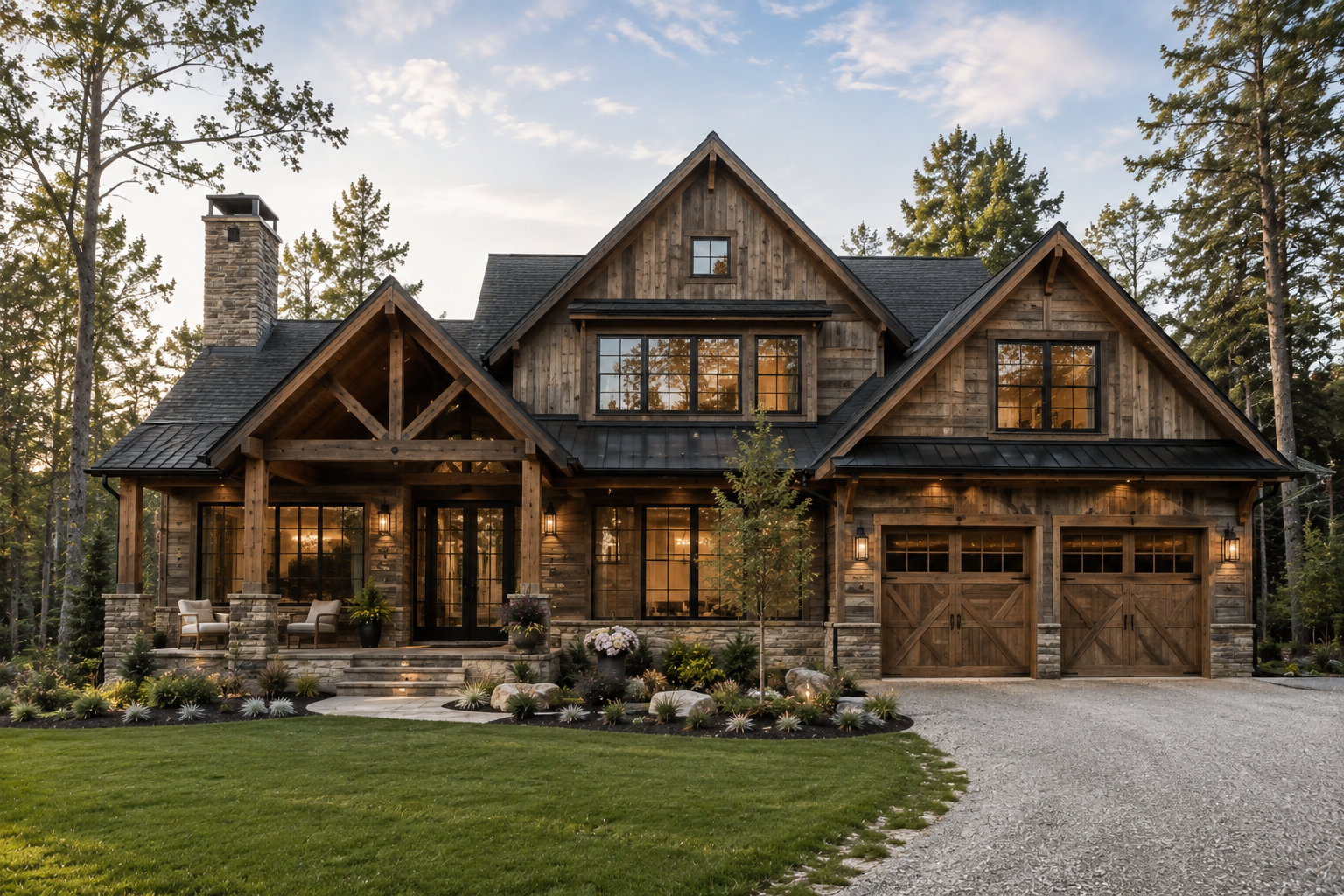
When someone searches “custom home builder near me” or “custom home builders in [city],” showing up near the top of Google can put your company in front of homeowners who are actively looking for a builder.
For custom home builders, that makes local SEO particularly valuable. You don't necessarily need thousands of visitors from across the country. You need the right homeowners in the communities where you actually build.
Quick answer: Custom home builders can improve their local Google rankings by optimizing their Google Business Profile, earning genuine client reviews, creating useful service and location pages, publishing detailed local project case studies, earning links and mentions from reputable local websites, and keeping their business information consistent across the web.
The objective isn't simply more website traffic. It's greater visibility in the markets where you want to build.
Start With Your Google Business Profile
Your Google Business Profile is one of the most important pieces of your local search presence.
Make sure the basic information is accurate: business name, phone number, website, business category, service area, hours, and other relevant company information.
Then keep the profile active.
Add high-quality photographs of completed homes and renovations. Include progress photos where appropriate. Keep services current and make sure the profile accurately reflects what your company actually does.
For a custom builder, real project photography is particularly valuable because it provides both homeowners and Google with additional evidence that you're an active business doing real work in the area.
Get More Genuine Google Reviews
Reviews are important for both search visibility and client trust.
A homeowner deciding who should build their custom home is making an enormous financial decision. Reading about another homeowner's experience can carry far more weight than anything the builder says about themselves.
Don't focus only on getting five stars.
Encourage satisfied clients to describe their actual experience.
A useful review might naturally mention that your company completed a custom home, major renovation, addition, or another project in a particular community. It might discuss communication, budgeting, craftsmanship, project management, or the overall building experience.
Never script fake reviews or pressure clients to include keywords.
Real, detailed client experiences are far more valuable.
Create Pages for the Services You Actually Want to Sell
Google needs to understand what your company does.
If your website has one generic page called “Services” containing two paragraphs about everything from renovations to new construction, you're making that harder.
Consider dedicated pages for your core services, such as:
Custom Home Building
Luxury Home Renovations
Home Additions
Design-Build
Preconstruction Services
Each page should genuinely explain the service, your process, the types of projects you undertake, and why a homeowner might choose your company.
Don't create pages simply to insert keywords.
Create the best answer you can for a homeowner researching that service.
Build Useful Location Pages
If you regularly build in multiple communities, location pages can help establish your relevance in those markets.
For example, a builder operating across a region might have pages targeting:
Custom Home Builder in [City A]
Custom Home Builder in [City B]
Custom Home Builder in [City C]
But there's an important distinction between a useful location page and SEO spam.
Don't copy the same page ten times and change the city name.
A strong location page should contain information specific to that market.
Show projects you've completed nearby. Discuss the services you provide there. Include relevant testimonials or case studies. Explain your experience with the types of homes or properties common to that area.
If you can't say anything meaningful about a location, you probably don't need a dedicated page for it yet.
Turn Completed Projects Into Local Case Studies
This is one of the biggest missed opportunities on builder websites.
Don't just upload 20 beautiful photographs and call the page “Modern Farmhouse.”
Tell Google—and prospective clients—what the project actually was.
For example:
Custom Home in Niagara-on-the-Lake, Ontario
Then explain the project.
What was built?
What was unique about the site?
What architectural style was involved?
What materials were used?
What interesting challenges did the project present?
What did your company manage?
A project case study can simultaneously demonstrate your service, location, experience, and quality of work.
That's much more useful than a photo gallery with almost no text.
Connect Your Service, Location and Project Pages
Your website shouldn't consist of isolated pages.
Suppose you publish a case study about a custom home completed in Niagara-on-the-Lake.
That project page could naturally link to your Custom Home Building service page and your Niagara-on-the-Lake Custom Home Builder location page.
Those pages can link back to relevant projects.
You begin creating a network of information around:
What you do → Where you do it → Proof that you've done it
That's a powerful structure for both prospective clients and search engines.
Keep Your Business Information Consistent
Your company information appears in more places than your website.
Google may find your business through industry directories, social media profiles, local associations, supplier websites, business listings, award pages, and other sources.
Make sure important information—particularly your business name, address where applicable, phone number, and website—is accurate and reasonably consistent.
Old phone numbers, outdated website addresses, duplicate listings, and incorrect company names create unnecessary confusion.
Earn Local Backlinks
A backlink is simply a link from another website to yours.
Links from credible websites can help search engines understand the authority and relevance of your business.
For a custom home builder, useful links can come naturally from organizations you're already involved with.
Examples might include local home-builder associations, chambers of commerce, architects, interior designers, suppliers, charities, community organizations, industry publications, award programs, and local media.
If an architect features a project you built on their website, ask whether they can credit and link to your company.
If your company wins an award, make sure the organization links to the relevant project.
The objective isn't to buy hundreds of random backlinks.
A handful of legitimate links from relevant organizations can be far more meaningful.
Publish Content Around Local Homeowner Questions
Blogging can support local SEO, but only if the content is useful.
Instead of publishing:
5 Reasons We Love Building Homes!
Answer questions prospective clients are actually asking.
For example:
How Much Does It Cost to Build a Custom Home in Ontario?
How Long Does It Take to Build a Custom Home?
Should You Buy Land Before Hiring a Custom Home Builder?
What Happens During Preconstruction?
Cost-Plus vs. Fixed-Price Custom Home Contracts
You can also create genuinely useful local content where geography materially affects the answer.
This gives homeowners another way to discover your company before they're ready to request a consultation.
It also builds a deeper body of information around the subjects your company wants to be known for.
Write for AI Search as Well as Traditional Google Search
Homeowners aren't only finding builders through traditional Google results anymore.
They're also asking AI-powered search tools questions such as:
“Who are the best custom home builders in my area?”
“How do I choose a custom home builder?”
“What should I look for before hiring a builder?”
There isn't a magic trick for appearing in these answers.
The fundamentals are similar: publish clear, useful information, demonstrate real experience, maintain accurate business information, earn legitimate mentions and reviews, and build authority around the topics and markets relevant to your company.
Make your content easy to understand.
Answer questions directly.
Use descriptive headings.
Demonstrate first-hand experience through real projects.
The stronger your company's presence is across the web, the easier it becomes for both traditional and AI-powered search systems to understand who you are, what you do, and where you do it.
Don't Try to Rank for Every City
A builder operating in one region doesn't need 100 location pages.
Prioritize the markets that actually matter to the business.
If your ideal projects come from five communities, build exceptional pages and a strong project portfolio around those five communities.
Depth is usually more valuable than creating dozens of nearly identical pages for places where you've never completed a project.
Local SEO should reflect your real business.
How Long Does Local SEO Take for a Custom Home Builder?
Local SEO is generally a long-term strategy rather than an immediate source of leads.
Improving your website today doesn't guarantee that you'll rank first next week.
Competition, your existing website authority, location, reviews, content, backlinks, and the strength of competing builders can all influence results.
But custom home builders have one major advantage:
Every completed project creates new marketing material.
A finished home can produce photography, a case study, a client review, social content, supplier mentions, architectural features, awards, and potentially backlinks.
Make publishing and documenting those projects part of your normal closeout process.
Over time, the company's online presence begins reflecting the reputation you've already built offline.
Local SEO Is Really About Building Evidence
Google doesn't need you to tell it 50 times that you're the best custom home builder in your city.
It needs evidence that you're a legitimate, relevant, trusted company doing the type of work someone is searching for.
Build that evidence through:
Real projects. Real locations. Real clients. Real reviews. Useful expertise. Consistent business information. Relevant relationships.
That's also what prospective clients want to see.
The best local SEO strategy for a custom home builder isn't about manipulating Google.
It's about making your company's real-world reputation easy to discover online.
And once those homeowners find you, your sales and preconstruction process needs to reinforce the same level of professionalism.
That's where tools like Specro can help—giving custom home builders a more structured way to manage specifications, allowances, selections, budgeting, procurement, and project readiness once an opportunity becomes a real project.