
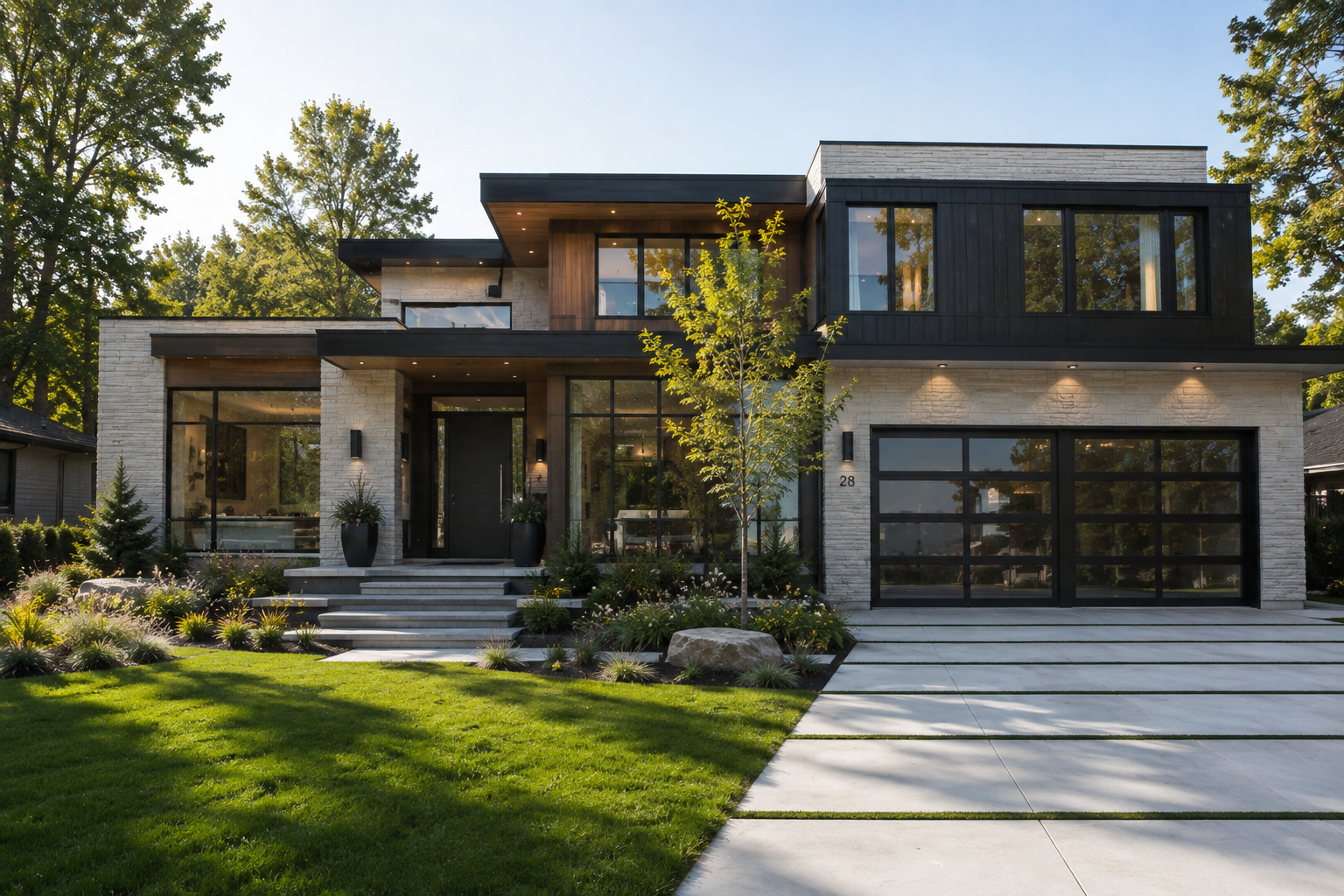
Your construction website can look great and still generate almost no business.
This is especially common with custom home builders and renovation contractors. The site has professional photography, an impressive portfolio, and a polished design—but very few qualified homeowners actually reach out.
The problem is often that the website was built to show completed projects rather than generate new ones.
Quick answer: A construction website may not generate leads because homeowners can't easily understand what the company does, where it works, what makes it different, what its process looks like, or what they should do next. Poor local SEO, weak calls to action, limited trust signals, and a portfolio-only approach can make an attractive website ineffective at generating qualified leads.
Here's what may be going wrong.
Your Website Doesn't Immediately Explain What You Do
A prospective client shouldn't need to investigate your website to understand your company.
Within a few seconds, they should know what you build and where you build it.
Compare:
Building Exceptional Spaces Since 1998.
with:
Custom Home Builder & Renovation Contractor Serving Niagara Region.
The first sounds nice.
The second tells both the homeowner and search engine exactly what the company does.
Your branding can still be creative, but clarity should come first.
Your Portfolio Is Doing All the Talking
Great project photography matters enormously in residential construction.
But photos alone don't explain why someone should hire you.
A homeowner looking at a $2 million custom home doesn't know whether you completed the entire project, renovated one portion of it, or simply installed the cabinetry.
Turn your best projects into case studies, not just galleries.
Explain what was built, where the project was located, what the client wanted to achieve, interesting construction challenges, major features, and how your company approached the work.
Now the project demonstrates experience instead of simply showing attractive photography.
You Aren't Answering Homeowners' Questions
Potential clients have questions long before they're ready to call a builder.
How much does it cost to build a custom home?
How long does construction take?
Should I hire an architect or builder first?
How does a cost-plus contract work?
What happens during preconstruction?
How much should I budget for allowances?
If your website answers these questions well, homeowners can discover your company while researching their project.
This is where a useful construction blog becomes valuable.
Instead of publishing generic company news, create resources around the questions your ideal clients are already searching for.
That helps traditional search engines understand your expertise while also creating clear, useful information that AI search tools can reference when answering construction-related questions.
You're Trying to Rank Everywhere
Construction is local.
A builder in one market doesn't necessarily need website traffic from homeowners across the entire country.
Your website should clearly communicate the areas you actually serve.
If you build in several important markets, create useful location-specific pages that explain your services and demonstrate actual experience in those communities.
Don't simply duplicate the same page 20 times and replace the city name.
Show relevant projects, discuss the type of work you perform there, answer local questions where appropriate, and demonstrate that you genuinely operate in that market.
The goal isn't traffic.
It's relevant local traffic.
There's No Clear Reason to Choose You
Most builder websites say roughly the same things.
Quality craftsmanship.
Attention to detail.
Exceptional service.
Building dreams.
Trusted professionals.
None of those things are bad—but they don't create much differentiation.
What actually makes your company different?
Maybe it's your preconstruction process.
Maybe you provide unusually detailed budgeting.
Maybe you specialize in architecturally complex homes.
Maybe clients receive structured weekly project updates.
Maybe you have extensive experience building high-performance homes.
Maybe you intentionally limit the number of projects you take on.
Be specific.
Proof is stronger than adjectives.
You're Not Showing Clients How You Work
Homeowners aren't only buying a finished home.
They're choosing a company they'll potentially work with for one or two years.
That's intimidating.
Your website should explain what happens after someone contacts you.
A simple overview might cover:
Initial Consultation → Preconstruction → Design Development → Budgeting → Selections → Construction → Completion & Warranty
Explain how clients participate, how decisions are made, how budgets are managed, and how communication works.
A defined process makes an unfamiliar experience feel more predictable.
That builds trust before the first meeting.
Your Calls to Action Are Too Weak—or Too Aggressive
Some construction websites barely tell visitors what to do next.
Others immediately demand:
BOOK YOUR FREE CONSULTATION NOW!
For a homeowner researching a major custom home, that can be too large a commitment too early.
Give visitors logical next steps.
Someone ready to build might want to Discuss Your Project.
Someone earlier in the process might want to read a guide about construction costs, explore your process, or view similar projects.
Different visitors are at different stages of the buying journey.
Your website should support more than one of them.
You Don't Have Enough Trust Signals
A beautiful website doesn't automatically prove you're a trustworthy builder.
Homeowners are looking for evidence.
That might include client reviews, testimonials, industry awards, professional affiliations, years in business, recognizable project locations, detailed case studies, team profiles, warranty information, and examples of your construction process.
Even small details matter.
Showing real people, real projects, and real experiences makes a company substantially more credible than a website filled with vague marketing language.
You're Getting Traffic—but From the Wrong People
More website traffic isn't always better.
A builder could publish an article that attracts 50,000 visitors and generate zero projects because those visitors have nothing to do with the company's target market.
The better question is:
Who is visiting the website?
A custom home builder would generally rather attract 300 local homeowners researching million-dollar construction projects than 30,000 people looking for DIY framing instructions.
SEO should support your business model, not simply increase a traffic chart.
You're Making It Difficult to Contact You
Once a qualified homeowner decides to reach out, don't create unnecessary friction.
Contact forms should collect enough information to understand the opportunity without feeling like a mortgage application.
Useful questions might include the project type, location, approximate budget, desired timeline, and current design stage.
You can gather additional information later.
And once someone submits an inquiry, respond.
A beautifully optimized website accomplishes very little if qualified leads sit unanswered for four days.
Your Website Isn't the Entire Problem
Sometimes the website is blamed for a larger sales problem.
If you're generating qualified inquiries but very few become projects, look beyond website traffic.
Review how quickly leads are contacted, how they're qualified, how initial meetings are handled, whether your process is clearly explained, how proposals are presented, and how consistently prospects are followed up with.
The website's job is to create and support opportunities.
Your sales and preconstruction process still needs to convert them.
What Should a Custom Home Builder Website Actually Do?
A good construction website should accomplish four things.
It should help the right homeowners find you, quickly understand you, develop enough trust in you, and know how to contact you.
Everything else supports those objectives.
That means your website doesn't necessarily need more pages, more animations, or more photography.
It may simply need better information.
Better Construction Leads Start With Clarity
The best construction websites don't feel like online brochures.
They help homeowners make decisions.
They explain what the builder does, demonstrate experience, answer real questions, establish credibility, and make the next step clear.
And that idea extends beyond marketing.
Once a homeowner becomes a client, they expect the same clarity throughout preconstruction and construction.
That's part of the philosophy behind Specro: helping custom home builders and renovation contractors create a more structured preconstruction process around specifications, allowances, selections, budgeting, procurement, and project readiness.
Good construction companies make complicated projects easier to understand.
Your website should do the same.